Fragments from an Unfinished Novel (Issue #3)
By Peter Dimock
When did the vacuous proceduralism of US liberal institutions and the empty liberal apologetics that pretend to provide ideological underpinnings for the imperial American state—when did these turn rancid? Were they irredeemable from the beginning? Could American nationalism ever have made good on its promised commitment to a universal democratic frame of collective accountability and moralized, historically just self-narration?
These are historical questions. The answer as to whether American liberalism has failed over the short term of the past two and a half years of US complicity in genocide in Gaza and now at the start of a catastrophic war of unlimited, open-ended aggression against the government and society of Iran does not seem to me to be in doubt. This essay is an attempt to represent through the free associations of a fictionalized individualized consciousness the subliminal registering of the ruinous consequences of the current American betrayal of democracy.
The fragments below from an unfinished novel are excerpts from notes written during his disciplined meditations by Tallis Martinson, a once successful American historian who has voluntarily committed himself to a long-term psychiatric care facility. His doctors have given him a diagnosis of “acute selective adult mutism with occasional episodes of malignant catatonia.” Tallis believes both he and his society now lack language adequate to the task of navigating continuance from one moment to the next from inside any sustainable, communicable frame of historically just coherence.
Tallis’s hospitalization followed a psychotic break he experienced in April of 2010 while giving expert witness testimony as a historian of American civil-military relations before a Congressional subcommittee hearing on the legality of the use by American personnel of unmanned drones for targeted assassination outside an active battlefield.
Tallis has become obsessed with the American artist and naturalist John James Audubon (1785 - 1851) after he experienced a sudden vision on a freakishly hot, sunny and windy November afternoon in 2009. His vision occurred when he came upon a crowd of sunbathers in Sheep Meadow in New York City’s Central Park. In this vision he saw the wings of angel warriors of the Christian Apocalypse fanning the tops of the ancient trees surrounding the meadow in which hundreds of New Yorkers of all ages and backgrounds had gathered and disrobed to enjoy the sudden summer warmth. In Tallis’s vision the wings of the angels on their way into the invisible last battle suddenly turned into the wings of the tropical birds that Audubon, at the age of six, the white, bastard son of his slave-trader and plantation owner father, saw on a mid-August afternoon in 1791 rising into the tops of trees through the smoke from burning cane fields on the French Caribbean island of Saint-Domingue at the beginning of the Haitian Revolution. Consumed by his vision, Tallis becomes overwhelmed by his identification with the child’s visionary understanding that what he is witnessing contains the unacknowledgeable truth of the reality of the life he will proceed to live out. Tallis suddenly thinks he understands that Audubon spent his entire life denying what the child knows but cannot say: that his wish to join the beautiful tropical birds ascending through the smoke into the tops of the tall trees next to the burning fields will be all that is left from his repression of his love and rage at the loss of the women whose love and upbringing gave value to his life. In fact, in all probability, Audubon was raised from infancy by Catherine “Sanitte” Bouffard, his father’s mixed-race mistress and head of the plantation household at Les Cayes and by his older, enslaved, half-sister, Marie-Madeleine Bouffard, born ten years before him. Both these women were too “dark-skinned” to be rescued by James Audubon Senior from the violence of the Haitian Revolution and brought back to revolutionary France and grow up as French citizens as were John James and his younger half-sister Rose. Between 1801 and 1803, Napoleon was to lose 35,000 to 50,000 men trying to regain the wealth of France’s richest colony by restoring slavery to it.
Britain lost between 45,000 and 50,000 troops with another 50,000 colonists dead between 1793 and 1798 trying to wrest the island from France through conquest. Estimates of Black Haitians who .died from military action, massacres and atrocities perpetrated by white colonists and their forces, and by disease and starvation during the Haitian Revolution between 1791 and 1804 range from 100,000 to 350,000 from a pre-revolutionary population of approximately 500,000 enslaved people. Among all the Haitians who died during the revolution whose names have gone unrecorded are thought to be Catherine Bouffard and an unknown number of her children, including Marie-Madeleine.
During his long-term hospitalization, Tallis has developed a baroquely intricate system of hand-written recorded notes taken during his daily (usually early morning) meditations. These meditations are based on free associations that are first memorized and recorded by hand in notebooks. Whatever gets written down in the transcription is then mentally transferred (or “sung” Tallis sometimes says) onto a carefully arranged system or “grid” of various memorized passages of texts that Tallis has memorized over a long period of time.
Tallis’s understands his system of meditation to be his attempt at a productive and “absolute” refusal of the coercions of the “administered” narratives he feels saturated with, controlled by, and which he tells his doctors “overwhelm him every moment of every day.”
Tallis’s meditative rebellion consists of forty-five-minute to one-hour silent sessions lying alone on this bed early in the morning with a notebook, pen, and a cup of black coffee with sugar. Tallis lies still and lets his mind drift without conscious direction. His only intentional act is to follow the flow of words and images that pass by without censorship while simultaneously giving relaxed, careful attention to any words or phrases that seem to stand out or “seem to be wanting to lead him somewhere.” He does not allow himself to initiate or force any such charged psychological moments. If they do not occur, so much the better.
When they do occur, his job is to consciously memorize the words that have spontaneously come to him and then to write them down by hand in a notebook. First the deliberate determination to memorize certain words and then the act of memorization: these Tallis is careful to keep separate from any further contemplation or associations the words may generate in his consciousness. Once the words are memorized, Tallis records them. Tallis has found that if this separation between memorization and then the exact recording of the words independently of their meaning is not observed, the precise words of the original association tend to vanish forever without leaving a trace. The writing down by hand of the securely memorized phrases often inspires him to write beyond the memorized words. Tallis allows himself to continue until the original impulse wanes or dries up.
The next step in Tallis’s method is not to let his mind persue the question of what the words he has written reveal about his character or his present state of mind. Tallis refuses on principle all the narratives he knows are circulating within which his recorded thought most automatically falls.
He spends whatever time remains of the hour mentally placing the memorized and recorded words of his notebook entry within a meditatively precise location available to him through an already determined, complex grid of previously memorized texts.
These are texts that Tallis has accumulated over several years and has chosen for verbatim memorization because of the extreme effect they have had on him when first encountered. For his meditative purposes he has arranged eight of these texts in his mind to function as eight tones of an imagined conventional (sometimes major, sometimes minor) chromatic musical scale.
Other elements of Tallis’s complex meditative grid in which he places each day’s notebook entry consist of the following: first, what he calls a “Credo,” an excerpt from the poet Osip Mandelstam’s 1934 essay titled “Conversation About Dante,” in which Mandelstam obliquely announces his poet’s duty to oppose and confront Joseph Stalin even though he knows it will mean his death.
Next on the grid comes the eight notes of Tallis’s meditative chromatic musical scale. Many of these notes come from passages in Emmanuel Levinas’s 1961 antiwar philosophical treatise following his five years in a German prisoner of war camp (June 1940 – April 1945) titled Totality and Infinity: An Essay on Exteriority. The eight notes bear the following designations: 1. Labor; 2. Immediacy; 3. Possession; 4. Justice; 5. The State; 6. Language; 7; Desire; 8 (Octave). Lucidity. With his recorded note still held resonantly in mind, Tallis quickly decides upon a three-note musical phrase created in his mind by the two intervals between three of these notes that dwelling on his day’s notebook entry seems to suggest to him are appropriate. He does this by running through the order of the notes in his mind and choosing the three notes that best seem to evoke the notebook entry’s intuited soundscape. He then recites the texts associated with those notes in his mind while holding that morning’s recorded meditation loosely in the background of his reciting of the memorized text.
The next meditative step in Tallis’s system is to assign the day’s notebook entry and its three-note phrase to one of four chapters of an unwritten biography of John James Audubon that Tallis was working on before he suffered his mental breakdown in the spring of 2010. The four chapters of the biography of Audubon have the following titles: “I. “The Complicity of Presence”; II. “‘As Soon as Thought Dries Up’” (Nadezhda Mandelstam); III. “The Idea of Universal Equality is a Historical Accomplishment”; IV. “The State is a Necessary but Insufficient Instrument of Historical Justice.”
The final placement of the entry onto the last section of the grid consists of assigning the day’s meditation to one of four of Audubon’s paintings of North American birds. Audubon created some 435 life-size watercolor paintings of birds to be used to make the engravings for his monumental life work, The Birds of America. He conceived and started working on it in the early 1820s and published it serially between 1827 and 1838. In this magisterial, four-volume “double-elephant size paper” work (it takes two people to turn a page), completed the year before photography was invented, Audubon recorded life-sized portraits of 489 species of American birds in over 1,000 individual figures. He was the first naturalist who depicted the posed dead bodies of his subjects (he was a prodigious hunter) as if still alive. Upon first seeing the images on the pages of Audubon’s book as they turned them, most viewers expressed amazement and sometimes awe at their sensation of experiencing the living presence of creatures going about their lives on the birds’ own terms, as if released from the confinements and threats of the human gaze. Only two of the backgrounds of the book’s 435 hand-colored pages contain a human figure.
The time Tallis allots for his meditative practice almost always runs out before the day’s notebook meditation can be finally fitted meditatively into all the places on the grid available to it. This is as it should be. Tallis leaves room in the notebook’s pages for the grid to be filled in completely at some later date if he ever decides to go back to that day’s entry.
“All this effort just to avoid inhabiting a conventional narrative of American history!” Tallis writes at the end of one of his notebook entries. “Precisely,” he notes in parentheses under this exclamatory sentence.
A link to Tallis’s complete meditative template in provided:
[Memorization Grid for Tallis Martinson’s Meditative Method, March 6, 2026]
Three Entries from Tallis Martinson’s Notebooks
February 27, 2026 (Friday)
If it were not violent, it would not be true—this thought; if it were true, it would have to find a way of making a peace in which it could and will be heard by someone formed by reciprocity: You’d think the contradiction would have been solved by now—this tiredness in which we wait—trying to find a continuity for speech uncontaminated by spent temporality—these durations formed by the opiates of love and hate. Sweet thought; sweet idea of a kindness just as prevalent as grass.
[Credo: “What matters in poetry is only the understanding that brings it about etc. . . .(Osip Mandelstam, 1934)]
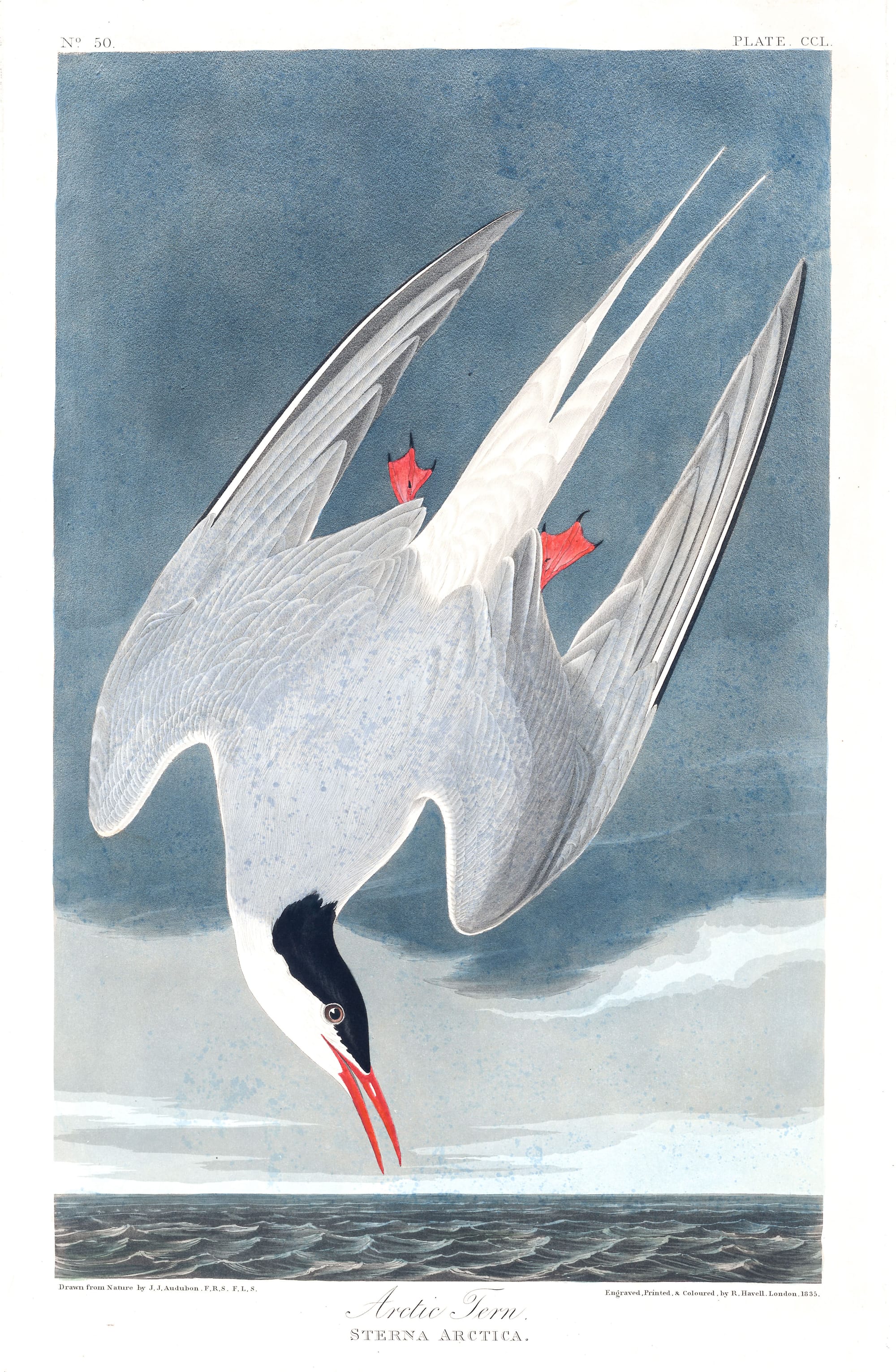
[Note 7. Desire: “Desire is absolute if the desiring being is mortal and the thing desired is invisible. Invisibility does not denote an absence of relation; it implies a relation with what is not given, of which there is no idea. The visible is an adequation of an idea with a thing, a comprehension that encompasses. Non-adequation does not denote a simple negation or an obscurity of an idea, but, beyond the light and the night, beyond the knowledge measuring things, the inordinateness of desire. Besides the hunger one satisfies etc. . . .(“Emmanuel Levinas, 1961) ⟹ INTERVAL ⟶ Note 2. Immediacy: “Is not Nature, rightly read, that of which she is commonly thought to be the symbol merely? . . . We are in danger of forgetting that language which all things and events speak without metaphor” (Henry David Thoreau, 1849, 1854) ⟹ INTERVAL ⟶ Note 4. Justice: “To affirm the priority of Being over existents is to already decide the essence of philosophy; it is to subordinate the relation with someone, who is an existent (the ethical relation), to a relation with the Being of existents, which, impersonal, permits the apprehension, the domination of existents (a relation of knowing), subordinates justice to freedom. . . .(Emmanuel Levinas, 1961)]; 2. Chapter IV. “The State is a Necessary but Insufficient Instrument of Historical Justice”; 3. Bird 4. “Arctic Tern” (1833) John James Audubon to a young assistant named William Ingalls who approached Audubon as he was painting the dead specimen’s body arranged as if in flight and remembering a scene the two had witnessed together from the previous day of this bird’s mate diving down to it as it lay stunned but as yet unhurt among the armed hunters’ legs: “He is here, he is scared, affrighted, he is looking up at you, you cannot help him.”]
March 4, 2026 (Wednesday)
These hours for a thought; these thoughts, as if they were air—for a whirl: unpeopled as the sea: all the money in the world for a space in which two—or more—could breathe: “USA!” “USA!” “USA!”; an anatomy of melancholy—black bile—but only after the monetized thought of it was turned into unturned pages—unwritten in the undigitized blank of a screen or sky: this boy on a street—about to be a man—a dog barking; admitted to be true: the official legal finding by the Office of Legal Counsel effectively legalizing torture within American Constitutional law signed and officially submitted by the Deputy Attorney General close to midnight on December 30, 2004.
[Credo: “What matters etc. . . .” (Osip Mandelstam, 1934)]
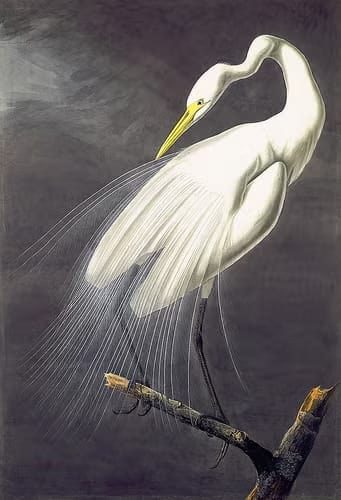
[1. Note 5. The State: “Thematization and conceptualization, which moreover are inseparable, are not peace with the Other but suppression or possession of the Other etc. . . . Ontology as first philosophy is a philosophy of power. It issues in the State and the nonviolence of the totality, without securing itself against the violence from which this nonviolence lives, and which appears in the tyranny of the state. The truth, which should reconcile persons, here exists anonymously. Universality presents itself as impersonal; and this is another inhumanity” (Emmanuel Levinas, 1961) ⟹ INTERVAL ⟶ Note 6. Language: “We shall try to show that the relationship between the same and other—upon which we seem to impose such extreme conditions—is language. For language accomplishes a relation such that the terms are not limitrophe within the relation, such that the other, despite the relationship with the same, remains transcendent to the same. The relation between the same and other, metaphysics, is primordially enacted as conversation where the same, gathered up in its ipseity as an “I,” as a particular existent, unique and autochthonous, leaves itself etc. . . . But to say that the other can remain completely other, that he enters only into the relation of conversation, is to say that history itself, an identification of the same, cannot claim to totalize the same and other. The absolutely other, whose alterity is overcome in the philosophy of immanence on the allegedly common plane of history, maintains his transcendence in the midst of history. The same is essentially identification within the diverse, or history, or system. It is not I who resist the system, as Kierkegaard thought; it is the other” (Emmanuel Levinas, 1961) ⟹ INTERVAL ⟶ Note 1. Labor: “Labor is the living, form-giving fire. It is the transitoriness of things, their temporality, as their formation by living time” (Karl Marx, 1857-1858); 2. Chapter III. “The Idea of Universal Equality is a Historical Accomplishment”; 3. Bird 1. “The Great Egret” (1821) (Not used by John James Audubon for The Birds of America)]
March 5, 2026 (Thursday)
No one is going now to another house; no one is going anywhere: this sweet air—this sweet nonsense—this rhyme—this off-rhyme for a world.
[Credo: “What matters in poetry is only the understanding that brings it about etc. . . .(Osip Mandelstam, 1934)
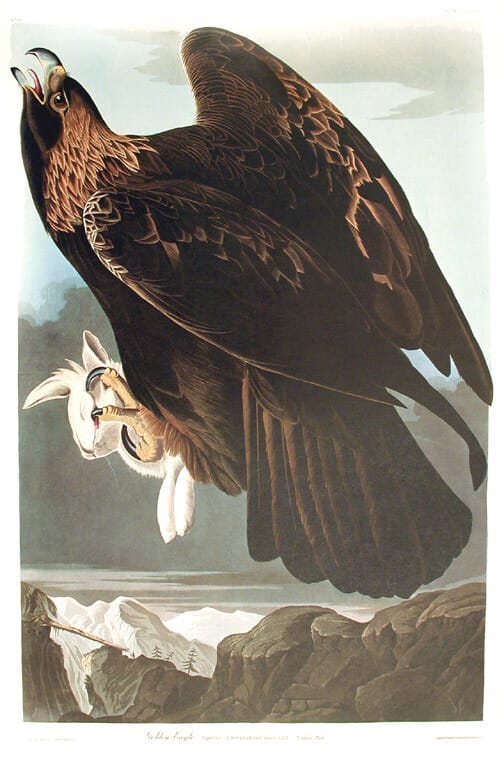
[Note 7. Desire: “Desire is absolute if etc. . . The very dimension of height is opened by metaphysical Desire. That this height is no longer the heavens but the Invisible is the very elevation of height and its nobility. To die for the invisible—this is metaphysics. This does not mean that desire can dispense with acts. But these acts are neither consumption, nor caress, nor liturgy” (Emmanuel Levinas, 1961) ⟹ INTERVAL ⟶ Note 4. The State: Thematization and conceptualization, which, moreover, are inseparable, are not peace with the Other but the suppression or oppression of the Other. For possession affirms the Other but within a negation of its independence. “I think,” comes down to, “I can”—to an appropriation of what is, to an exploitation of reality. Ontology as first philosophy is a philosophy of power. It issues in the State and in the non-violence of the totality, without securing itself against the violence from which this non-violence lives, and which appears in the tyranny of the State etc. . . .” (Emmanuel Levinas, 1961) ⟹ INTERVAL ⟶ Note 3. Possession: “Possession is preeminently that form by which the Other becomes the same by becoming mine” (Emmanuel Levinas, 1961); 2. Chapter II. “‘As Soon as Thought Dries Up It Is Replaced by Words’” (Nadezhda Mandelstam, 1970); 3. Bird. “Golden Eagle” (1833)]

Member discussion