Puebla x Palestine: Disseminating the Solidarity of Resistance
By the Puebla x Palestine Collective
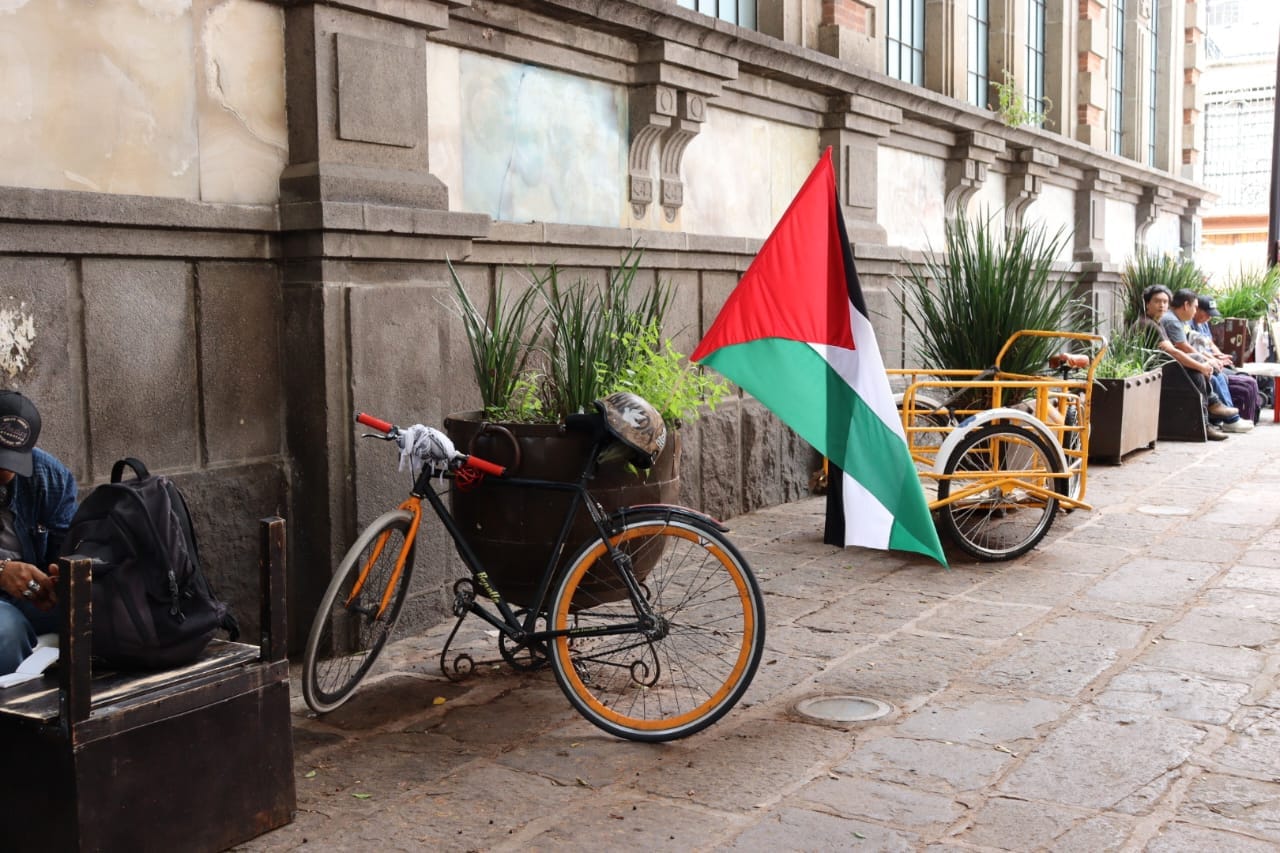
Puebla is a Mexican city that has always been considered politically apathetic. Its population has been predominantly conservative. Puebla’s citizens, government officials, and civic leaders rarely take firm political stances or make public statements about ongoing international conflicts. The same is true regarding political issues beyond locally defined boundaries. In recent decades, Puebla’s population has increased dramatically. The city has even become a welcome haven for thousands of university students. This is context in which the resistance movement Puebla x Palestine emerged.
Its initial spark was lit when Palestinian journalist Bisan Owda posted a heartbreaking video from Al-Shifa Hospital. She implored the world to turn its attention to Palestine and the people of Gaza. Many of us hadn’t been indifferent to what was happening in Palestine before this, but now some of us agreed that this was a call to which we had to respond.
Kites for Palestinian children
Around the same time, an international call for a kite-flying event in solidarity with Palestine was circulating on social media. A core group of us designed a poster and shared it on our personal accounts. We didn’t know what to expect, but we felt compelled to organize a small kite-making workshop.
People arrived whom we didn’t know and who didn’t know us, but who had seen the invitation and decided to come. Witnessing people’s response to our initiative was deeply moving. We set up a clothesline with statistics on slips of paper objectively documenting the extreme conditions and brutality to which Palestinians were being subjected every day. The enormities implied by the bare figures were chilling. People stopped to read them, lingered, and created short messages of solidarity.
There were no grand speeches. We launched our kites to release the pain that pierced us. Above all, we raised our solidarity to the sky. This was our first collective action: intimate, spontaneous, and profoundly meaningful.
Weeks later, we decided to organize a second kite flight. This time, no one came. In those days, the Popocatépetl volcano was especially active, and the streets were filled with ash. Far from discouraging us, that experience confirmed that we needed to organize ourselves better to maintain our commitment to art and creativity as forms of solidarity in the face of unconscionable violence.
Art for Palestine
We launched a call for poster designs. We called our project “Art for Palestine” and targeted it at the university community. The exhibition was held at a local university. Up until then, we were just a group of friends, who like many other people around the world, shared our anguish, sadness, and frustration at the inaction of international and national institutions. We felt we were witnessing a genocide in which silence and indifference were being normalized as the prevailing responses. Few people around us seemed to grasp the gravity of the situation.
The exhibition was accompanied by our first public statement: words spoken before a small audience with trembling voices and heavy hearts. Afterward, something very moving happened. Professors from different disciplines approached us and told us they shared our anguish. We agreed that the university should be a generative and creative space for reflection, social awareness, and action. Some of us worried that perhaps we were acting too late.
But our concerns inspired new ideas, and with them emerged a kind of collective embrace. Teachers recommended films and books, shared the activities they promoted in their classrooms, and discussed how they analyzed events with their students. Now we knew we weren’t alone. We were no longer just friends grappling with sadness. We were beginning to recognize ourselves as a community ready to organize.
We had a critical mass of committed people, the energy, and above all, the clarity of conviction necessary not to stand idly by waiting for something to happen or for someone else to speak. It was in that moment that we realized that our collective was taking coherent shape.
Then came Rafah
Instagram has been the channel we choose to bring Puebla x Palestina to life, in part,as a platform through which to transmit a message of solidarity and activism. Some of us are also professors. We have noticed the effects of disinformation and fake news circulating within the university community. Some people could not get past expressing shock at the brutality of Hamas’s attacks against Israel. In their minds, Israel could only be waging a just war. Israel’s absolute right to self-defense was indistinguishable from the universal good of globally militarized security.
During this initial stage, we considered it important to share information so that people could form an opinion based on access to reliable testimonies, data, and images. We also sought to connect people with Palestinian voices through outreach . Then, one Sunday in late May 2024, a refugee camp in Rafah was deliberately set on fire by the Israeli Occupation Forces. Dozens, if not hundreds, of Palestinians lost their lives in this brutal attack.
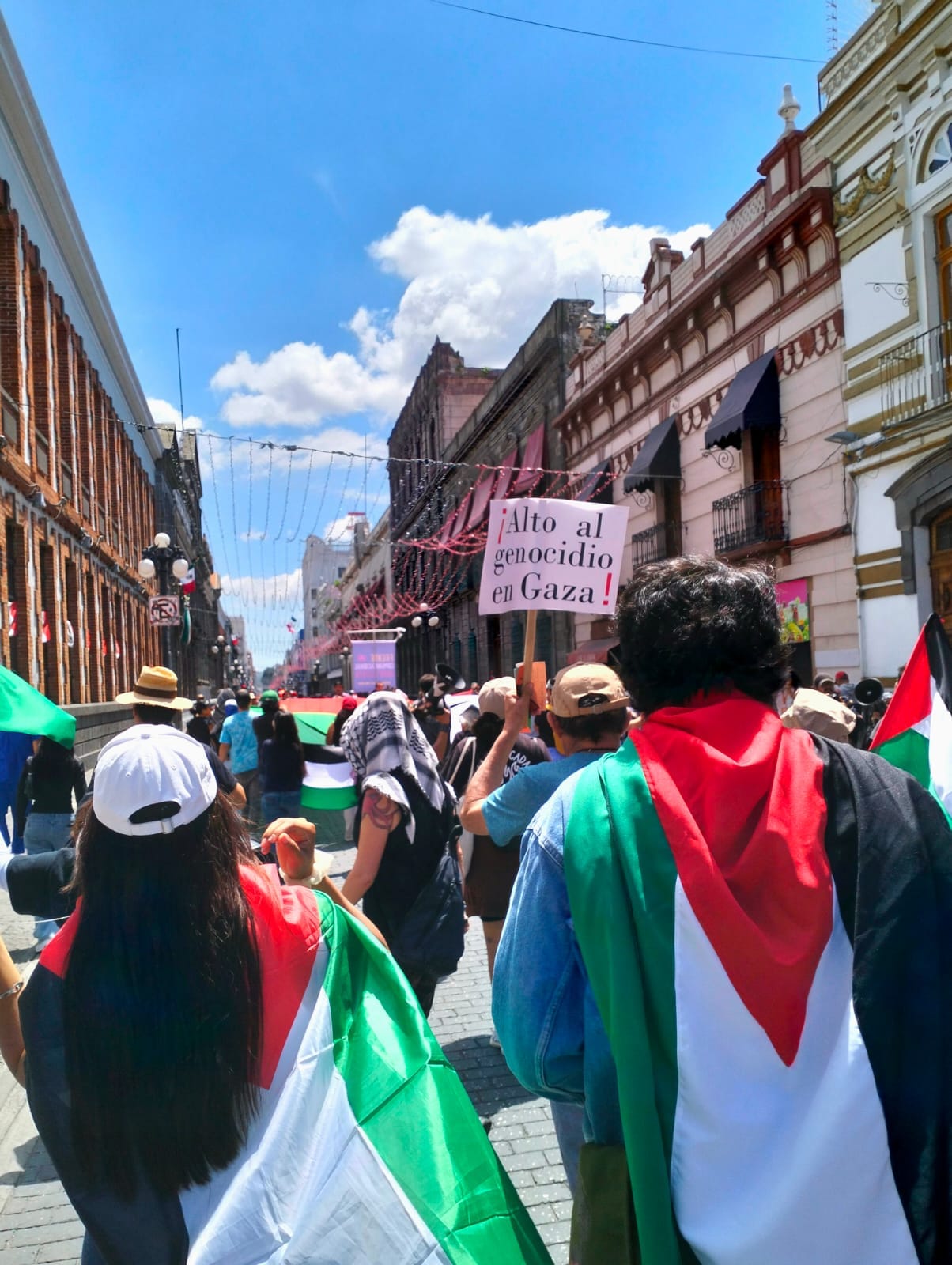
Being such a small group and being realistic about the low turnout we had to expect we knew marches couldn’t be our first option. None of us had experience organizing demonstrations of any kind (although all of us had participated in several). But the attack on Rafah was so terrible that we couldn’t let it go unanswered. We called for a rally.
The gathering took place in San Andrés Cholula at dusk. People responded to the call, carrying candles, matches, signs, and words. We prepared a statement, which we read aloud, our voices breaking once again. There were tears. We had witnessed Palestine endure seven months of death and cruelty. It seemed unbelievable to us that the world was experiencing a genocide with live, real-time news reports with apparent total indifference.
Many people shared the same sentiment:
“I feel frustrated, I’m so angry, my heart is broken; my family, my friends, and my partner don’t understand; coming to this space has been a cathartic experience.”
The vigil for Rafah was conceived as a protest, but it became a meeting point that sustained us during the following months.
Embroidery from Mexico for the people of Gaza and their journalists
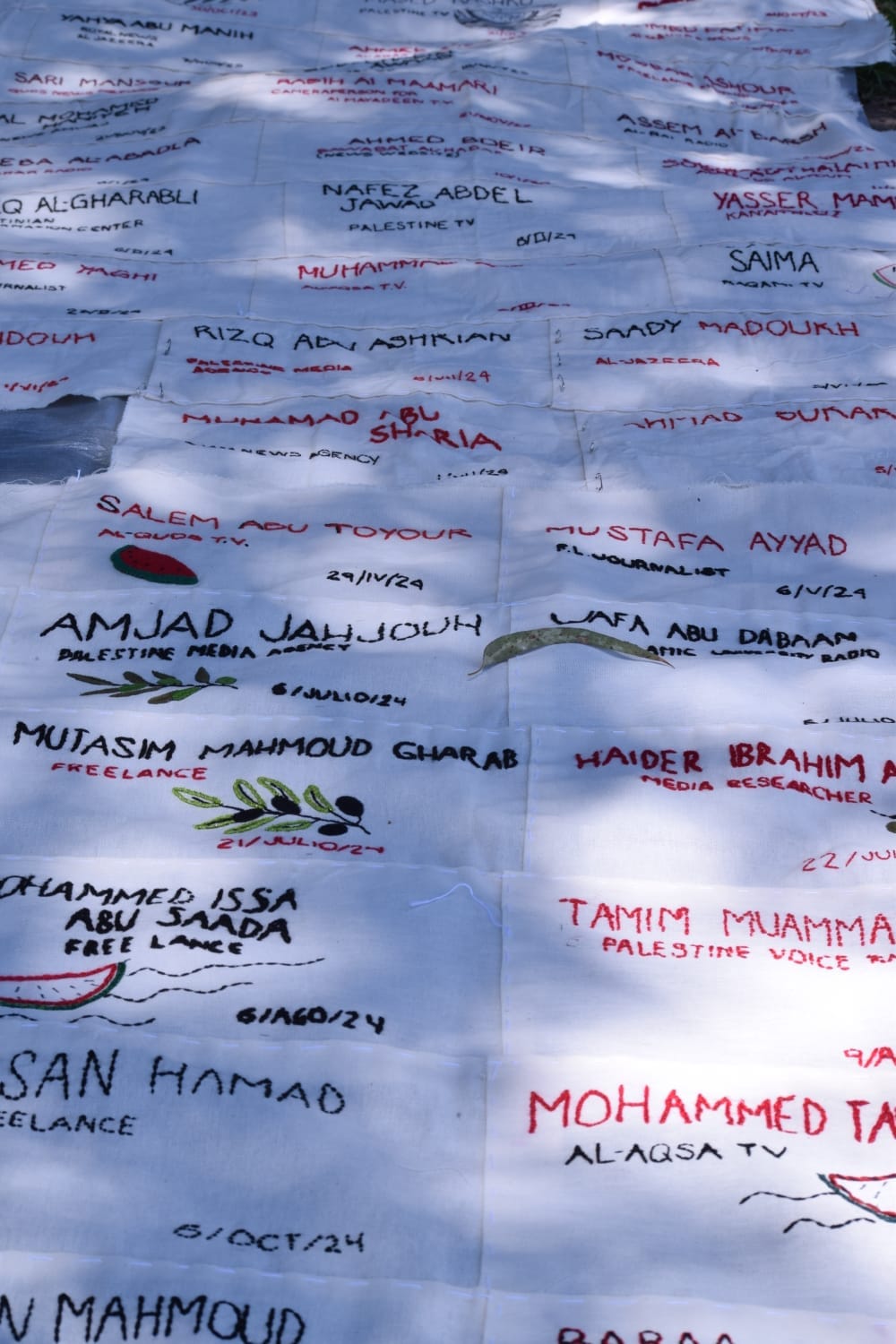
In the following months, we organized other kite-flying and origami boat-making events in solidarity with the Freedom Flotilla. But it was the call to embroider in August 2024 that gave our collective new impetus. In collaboration with visual artist Rosa Borrás, we invited people to embroider the names of Palestinian journalists and media workers killed during the genocide.
Collective embroidery is a simple way to occupy space. The labor is democratic. Entire families, women, and groups of friends have attended the sessions. Interesting conversations have arisen during the work. We have forged a network of solidarity with the people who attend.
One of these embroidery sessions took place during the Day of the Dead celebrations at the university where some of us work. We gathered at the altar we had dedicated to Palestinian journalists. Staff, students, and members of the public all joined together to complete the quilt, which lists the losses of media workers. People would sit and embroider for a while. If someone had to leave, someone else would take over the unfinished task.
In the context of the celebration, we talked about how the exercise of memory is inseparable from protest, in the struggle for the right of Palestinians to exist as a free people.
Signatures for Palestine
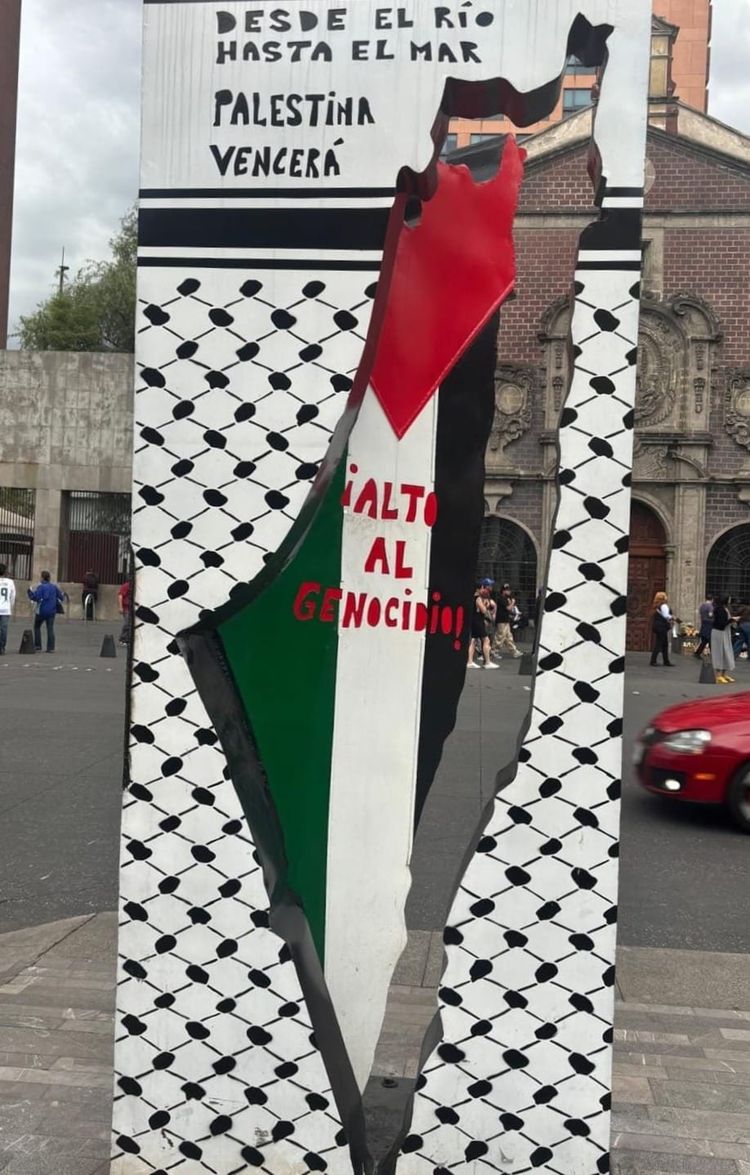
The threat to freedom posed worldwide by Israel’s genocide against the Palestinian people has sparked solidarity movements around the globe. In Mexico, a citizens’ initiative, spearheaded by Guadalajara and Mexico City, seeks to demand that the Mexican government sever diplomatic relations with Israel. This demand echoes the global BDS (Boycott, Divestment, and Sanctions) movement, and various groups nationwide have responded to the call. In Puebla, we’ve activated several locations as permanent collection points for donations to support BDS initiatives, but we’ve also set up temporary ones, including at anti-speciesist and anti-fascist events. All anti-colonial struggles are finally one and the same.
Finding the commons
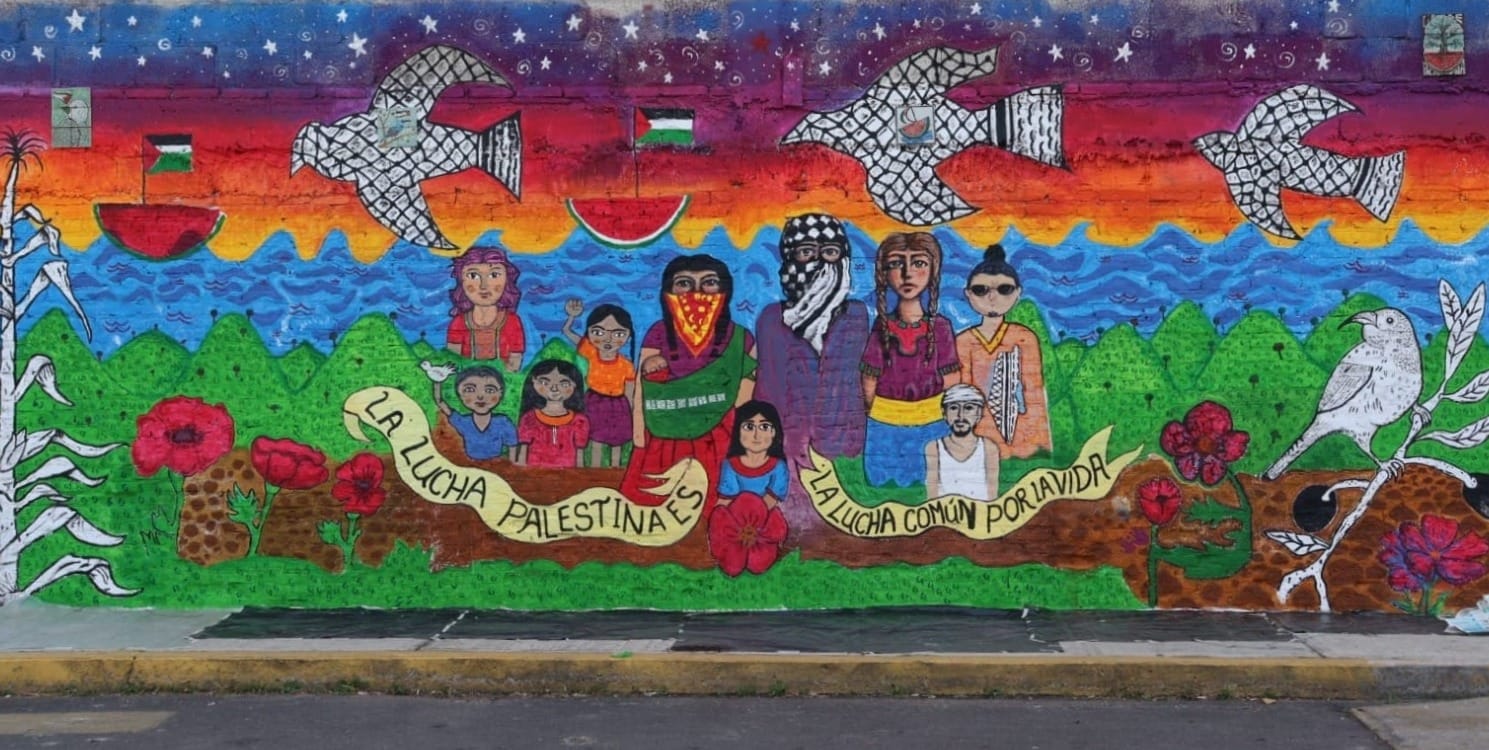
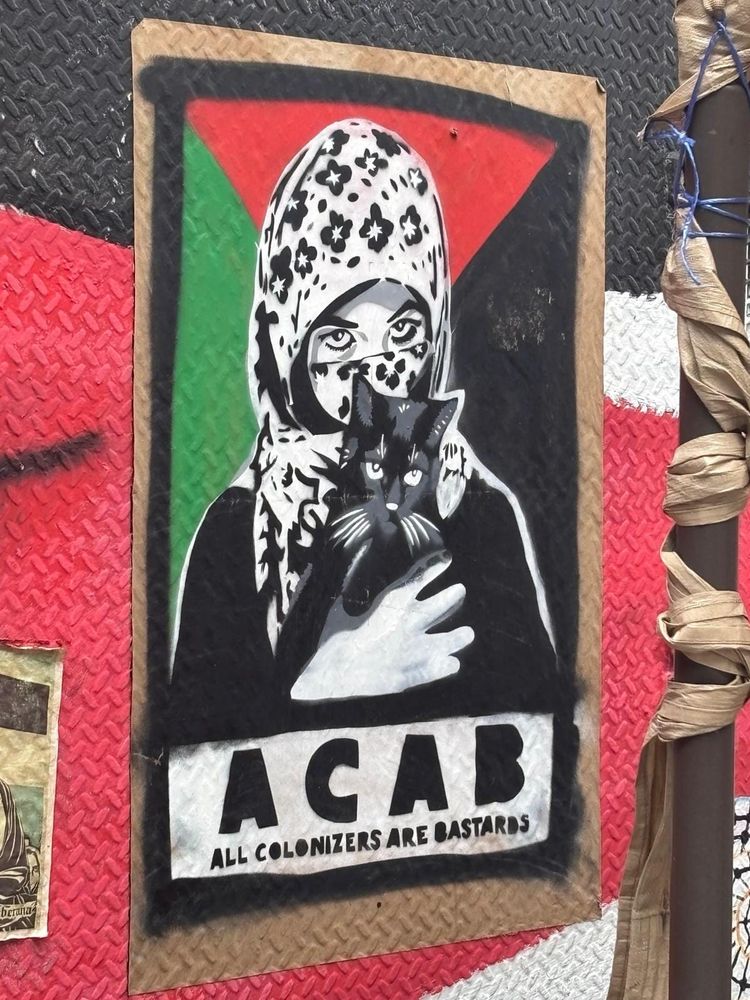
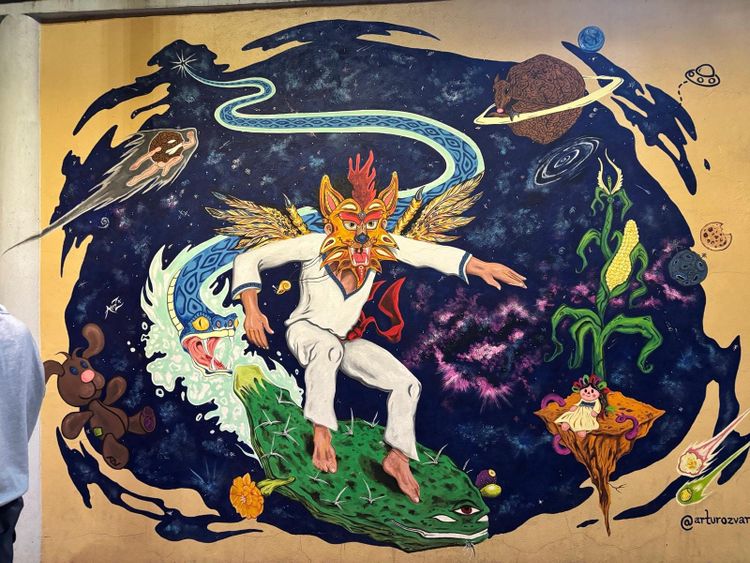
Among the people we met over the past two years, some artists proposed creating a mural. Excited, we secured a space in Cholula (a city within the metropolitan district of Puebla). The project was carried out in collaboration with several other collectives: the Chiras Pelas and Nahual Rabioso artists’ group, and the human rights group NODHO (Nodo de Derechos Humanos). Generous private donations also supported the mural project. The sketch was created collectively, combining the ideas of people who had participated in the activities at different times. The painting was a collective effort. The unifying theme of the mural was simple: the Palestinian struggle is also the struggle of the people in Mexico. The struggle is for land and for life.
Our movement has organized various events: audiovisual screenings, introducing Palestinian culture to the people of Puebla through its gastronomy and music, and participating in events organized by other groups in Puebla. We have recognized and disseminated the importance of the struggles for water in the region, the disappearance of the 43 students from the Ayotzinapa Rural Teachers’ College, and the feminist struggle. We have met and spoken with the Palestinian community and with national and international solidarity networks. Through solidarity with the Palestinian struggle, we continue to strengthen our framework for the global fight for dignity and against colonialism, patriarchy, and cruelty.
October 2023 marked the indelible beginning of a tremendously dark and frightening period. It also brought us closer to like-minded people. Collectively we have allowed ourselves to glimpse a light at the end of the tunnel. We do not walk this path alone. We walk it together. In that spirit, we hope our hope will reach the Palestinian people. Through Puebla x Palestine, we unite our feelings, share our pain, and raise our voices.
We recognize that the ongoing genocidal campaigns threaten alternative narratives and memory. We are mobilizing resources against the cruelty, atrocities, and war crimes being committed by Israel and its equally criminal, complicit allies, including the United States. Our efforts will continue. Naming, uniting, and building solidarity make visible the reality that the logic of death that now governs world politics has colonial foundations. That logic and those foundations are irremediably terricidal, memoricidal, and ecocidal.
We affirm that we are not here to meekly adapt to an order that normalizes indifference, fragments relationships, and turns life into a commodity. We are here to rebuild the commons. Our collective is not just a workspace. We recognize and define ourselves as a living territory of encounter, care, and shared awareness, where feelings and thoughts circulate, are named, and are organized. Faced with isolating individualism, we respond with affection and solidarity; faced with the apathy fostered by the saturation of images and spectacle, we respond with presence and connection. Rehumanizing is not a symbolic gesture. In our understanding, it is a practice of listening, remembering, and acting together. That is why we insist on the collective as a creative and protective force. No one is saved alone. Only by socializing memory, dignity, and hope can we open real cracks in the system and sustain livable futures.
FREE PALESTINE!
Member discussion