About this site
Ignorance allied with power is the worst enemy justice can have.
James Baldwin (1924-1987)
“No exit.” “Dead end.” “No way out.” These are among the phrases that usually come to mind when we use or hear the French expression “cul-de-sac.” In its most explicit French use it refers to a street—or situation—that has no way out. It therefore conveys a rueful sense of desperation that there is no way to escape from an impasse—either of one’s own, or someone else’s making—but, in any case, an impasse indicating a possibly irreversible wrong turn.
The phrase has a playful side. Its playfulness is even more important given the dire psychological state it denotes and to which both its ancient and more recent etymological sources glancingly attest. We use the French phrase for our journal’s title to foreground by indirection—in as uncompromised and un-ironized a way possible—our commitment to the journal’s epigraph taken from the writing of James Baldwin. That epigraph names and centers, without qualification, the contemporary assault on justice by presently constituted exterminatory economic and state power as the crisis we believe human language and activity must now be asked and used to address.
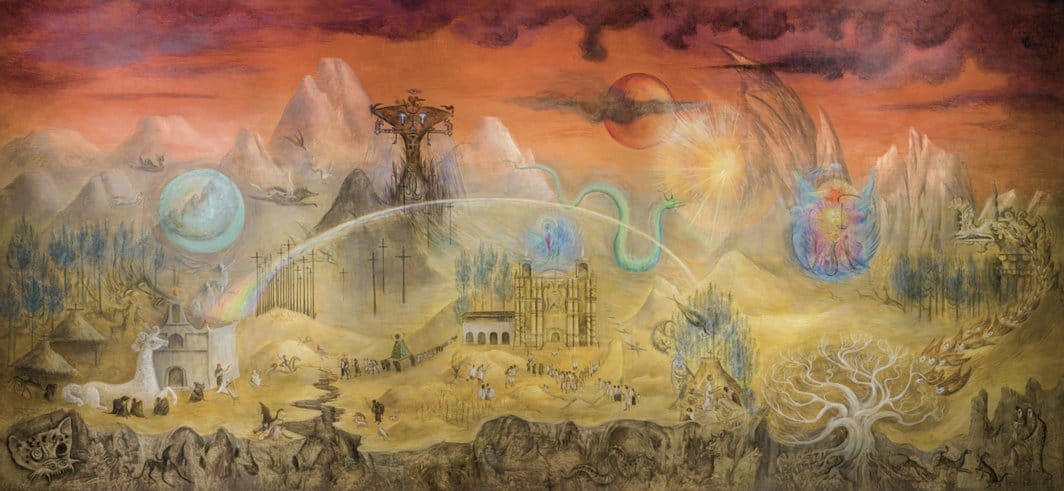
James Baldwin often relied on the word “conundrum” to express a similar feeling when describing the social upheaval of his times, not only in the sense of a challenging or thorny situation but most precisely one without solution, or at least one in which recognition of the problem often expressed or created an even harsher reality. Baldwin’s use of the term seems quite apropos, since half a century after his writings we are still facing, if not the same exact problems, ones evolved from the same conundrums. Yet “conundrum” shares with “cul-de-sac” a playful side, an enjoyment of presenting apparent contradictions, pun-like qualities, and even a sense of repetitive mystery.
We emphasize the conundrum-like quality of “cul-de-sac” because we believe that this French term is an apt and accurately expressive characterization of many of the tensions present in our own times. It also encapsulates the seemingly inconsolable quality of the insights that Baldwin expressed in his writing and life—a quality whose extremities once again threaten to exceed all adequate verbal and artistic representation.
The anomie so prevalent and increasingly desperate since the turn and beginning of this century is now suddenly heightened—some would say unbearably—by the normalization of genocide and by seemingly unopposable, exterminatory corporate greed. With the rise of right-wing movements around the globe, many feel an increasingly overwhelming sense of hopelessness and futility. And yet, paradoxically, it was from within the cul-de-sac of the similarly extreme injustice of his times and from the depths of its equally insoluble conundrums that Baldwin found hope and a motivation for change and transformation.
We hope that the journal Cul-de-sac will be a portal to literary and artistic contributions of all kinds that sustain commitment to the vision implicit in Baldwin’s words naming the present crisis as constituted by an exterminatory, world-wide assault on justice. Surely all human cultures have variously expressed the consistent need to affirm the continuity of a universal justice that Baldwin’s words desperately but confidently help call into being in the hopes of present enactment. Words written from within a cul-de-sac, we firmly believe, may still do what the Greek playwright Aeschylus, thousands of years ago, asserted human words and actions were supposed to do: “help tame the savageness of humankind and make gentle the life of the world.”
Etymologies
conundrum (n.)
1590s, an abusive term for a person, perhaps meaning "a pedant" c. 1600, "a whim" 1640s, "pun or word-play," a word of unknown origin, said in 17c. to be Oxford University slang. Perhaps the sort of ponderous mock-Latin word that was once the height of humor in learned circles; Skeat suggests Latin conandrum "a thing to be attempted" as the source. Also spelled quonundrum.
From 1745 as "a riddle in which some odd resemblance is proposed between things quite unlike, the answer often involving a pun." (An example from 1745: "Why is a Sash-Window like a Woman in Labour? because 'tis full of Panes.")
cul-de-sac (n.)
1738, as an anatomical term, "a diverticulum ending blindly," from French cul-de-sac, literally "bottom of a sack," from Latin culus "bottom, backside, fundament" (see tutu). For first element, see tutu; for second element, see sack (n.1). Application to a street or alley which has no outlet at one end is by 1819.
Entries linking to cul-de-sac
"large oblong bag," Middle English sak, from Old English sacc (West Saxon), sec(Mercian), sæc (Old Kentish) "large cloth bag," also "sackcloth," from Proto-Germanic *sakkiz (source also of Middle Dutch sak, Old High German sac, Old Norse sekkr, but Gothic sakkus probably is directly from Greek), an early borrowing from Latin saccus(also source of Old French sac, Spanish saco, Italian sacco), from Greek sakkos "bag (made of goat hair); sieve; burlap, large burlap cloak," which is from Semitic (compare Hebrew, Phoenician saq "sack, cloth of hair, bag, mourning-dress").
The wide spread of this word for "a bag" probably is due to the incident in the Biblical story of Joseph in which a sack of corn figures (Genesis xliv). In English, the meaning "a sack or sack material used as an article of clothing" as a token of penitence or mourning is from c. 1200. The baseball slang sense of "a base" is attested from 1913.
The slang meaning "bunk, bed" is by 1825, originally nautical, hence many slang phrases, originally nautical, such as sack duty "sleep"; the verb meaning "go to bed" is recorded from 1946. Sack-race (n.) is attested from 1805.
ballet skirt made up of layers of stiff frills, 1910, from French tutu, alteration of cucu, infantile reduplication of cul "bottom, backside," from Latin culus "bottom, backside, fundament" (from PIE *kuh-lo- "backside, rear;" source also of Old Irish cul "back," Welsh cil "corner, angle"), but the ultimate origin is obscure [de Vaan].
Issue 1
The first issue of the journal is dedicated to expressing the experience of migration as a common, normative, and innately human experience. We explicitly chose the topic of migration to counter the contemporary political turn denigrating and vilifying immigrant’s search for better livelihoods and human solace. It also looks to explore the contradictory stance of an American continent in which over ninety percent of its citizens claim an ancestral immigrant heritage and a globalization process that is based on the exploitation of native populations. Therefore, we seek to include stories, poems, art, essays, and other expressions of the lived reality of all facets of the forgotten and displaced humanity of migrants in the politics of the present, since more than ever the human voices of migrants are excluded in the mainstream media and traditional publishing spaces.
Ultimately, we hope the content sparks deeper empathy for all of us living with the trauma and fear of anti-immigrant rhetoric and violence, drawing on our experiences and emotional wealth to recognize the essential need to transcend borders and re-embrace our common humanity.