A Note from an Editor and a Fragment from a Novel in Progress
By Peter Dimock

September 3, 2026
Christopher: My German friend, my German buddy, my German self—these words for a thought: these words for a song made from the intervals between them.
These are the nonsense, free-association words that came to me recently as I gave myself over to my morning ritual of trying to hear the interior voices of my novel’s three protagonists. In this way I try to inhabit the intervals of my characters’ fictional existences.
As someone who worked in American book publishing for over thirty years, I have come to understand my work on Cul-de-sac as an attempt to reconcile my intense investment in writing, reading, and fiction with my conviction that their future does not lie within the present configuration of book publishing.
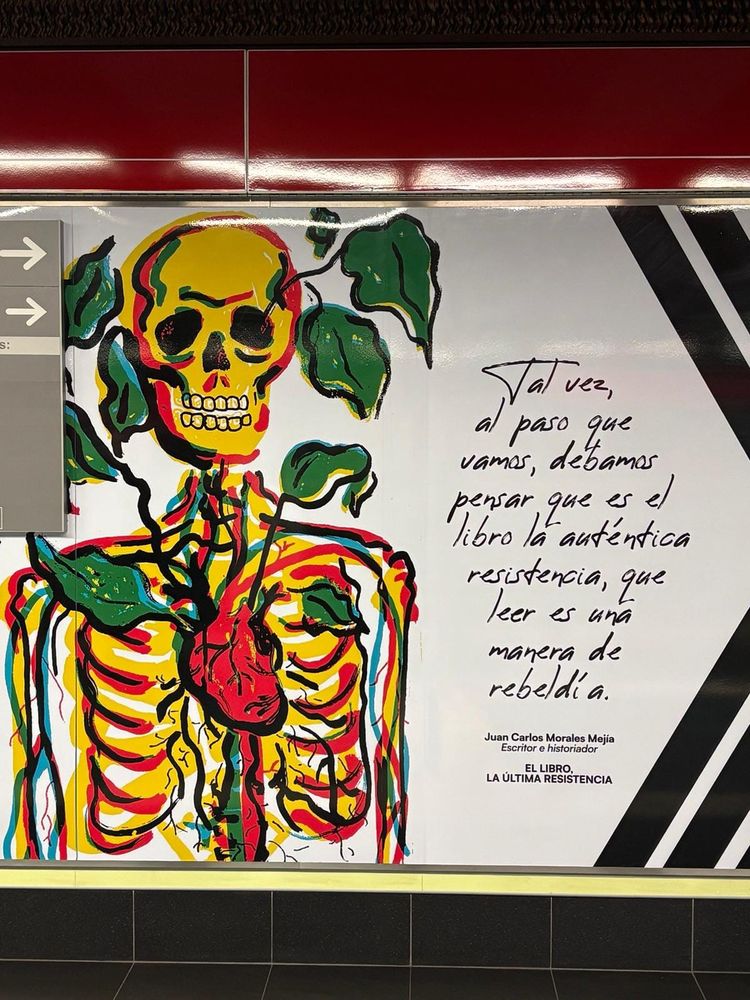
All my life I have unselfconsciously understood “the book” as the organizing and generating object through which the value of linguistic meaning was largely preserved, mediated, and transformed across a historical trajectory of human social, cultural, intellectual, and “civilizational” transformation.
The print culture of “the book” was also, I assumed, the cultural form by which contemporary modernity would largely work out the intellectual and moral meaning of its condition. I no longer believe this.
Clearly “the book” as I have understood it for most of my life has been radically displaced, if not dispossessed of its central position of authority and accumulated weight of cultural power and influence.
I have been forced to come to terms with the current state of print-culture literacy as a particular but by no means culminating linguistic technology capable of empowering and determining both human affect and agency. Print-culture literacy must now be understood as only one linguistic development among other possibilities.
We must learn to recognize books not as the triumphant universalizing technology that gradually and progressively unlocks ultimate knowledge of nature and truth, but as one historically developed cultural form that carries with it (and itself produces) what one scholar calls “conceptual and cognitive implications.”1
How we separate the nature, power, and value of human language from the history of “the book” and Western print literacy is now crucial.
The point is not to opine or issue laments about what “the book’s” displacement means but to explore how we can transform our understanding of “the book’s” place within an overall history of natural language so that reading and writing can still reconfigure consciousness.
This approach to these pursuits will reveal new possibilities for emancipation and empowerment through language, both in the past and in the present.
We are just at the beginning of this project. Ivan Ilich dates the controlling dominance of book literacy within Western modernity from around 1127 to the late 1980s or early 1990s.[2] This means that “the book’s” definitive displacement from its commanding intellectual and cultural centrality is only a few decades old. As such, we must recognize this as an opportunity to shape humanity’s future relationship with the written word.
Following this persistent summons, and because of my desire to reconcile with “the book’s” displacement, I am participating in Cul-de-sac’s collective creation, production, and distribution of original and translated written work to find a better way to respond to what I perceive as the ongoing incorporation of language itself by AI within a cybernetically engineered regime of surveillance and monetized command and control.
I recently devoted some time to compiling a list of the people I most wanted to talk to in my life. These are the people I most hope will find something valuable in reading my works of fiction and who will respond positively to the editing I suggest to Cul-de-sac’s writers. Forty people appear on this list.
I now think my publishing task is to address those forty people in my literary work. Such a quixotic publishing limit is my attempt to experience an expressive language that is demonetized. Trying to hear the voices of the characters of my novel, I find myself almost hearing the intervals between their words as music rather than as occupied “channels of communicative linguistic meaning.” Somehow I want the creation of that distinction to prefigure horizons of peace within our immediate reality of permanent war.

[1] See David R. Olson, The World on Paper: The Conceptual and Cognitive Implications of Writing and Reading (New York: Cambridge University Press, 1994)
[2] In a book published in 1993, Ivan Illich credits the German scholar of the history of reading, Hans Blumenberg, in his 1986 Die Lesbarkeit der Welt, for the crucial insight concerning the historical boundedness of book textuality’s arc of authoritative cultural dominance and intellectual preeminence. Illich writes, “Of special relevance to my argument is [Blumenberg’s chapter] on the construction of the ‘genetic code’ as ‘text’ since Erwin Schroedinger’s Trinity College lectures in 1944. The new ‘text’ has no meaning, no sense, no author; it is conceived of as a command sequence, and upsets the meaning of reading. [Emphasis is mine.] Corporately engineered AI undermines natural human language as an independent and autonomous realm of value creation. See Ivan Ilich, In the Vineyard of the Text: A Commentary to Hugh’s Didascalicon (Chicago: The University of Chicago Press, 1993), p.118.

Member discussion