The Rest Is Silence: Introduction to (Issue #2)
By Hugo Benavides
Only the conscious horror of destruction creates the correct relationship with the dead; unity with them because we, like them, are victims of the same condition and the same disappointed hope.
Max Horkheimer and Theodor Adorno (1947), Dialectic of Enlightenment
On February 22, 1942, Stefan Zweig, and his wife Lotte (Elisabet Charlotte Altman), committed suicide in their home in Petropolis, Brazil. One of Europe’s most popular German language writers, in 1934, Zweig fled Nazi persecution by emigrating first to London and Bath, and then to the United States, where in 1940, he briefly, attempted to live a writer’s life in exile. At the end of 1940, he and Lotte once more attempted to rebuild their lives and confront the world they had lost by moving to Brazil.
I first encountered Zweig’s shadow there by accident, stumbling upon a monument to his memory in Salvador, near the iconic lighthouse in Porto da Barra. Ever since, I have tried to imagine what it was like for him as a pre-eminently successful writer and intellectual to engage with the horror that had embraced his homeland. How did he and millions of other exiles attempt to understand the Fascist political turn and resulting catastrophic enormities of human cruelty that had spread over the whole of Europe?
Of course, Zweig was not alone in his despair. Sigmund Freud and Walter Benjamin chose the same path of exile and suicide just a short while earlier. Freud died in London in late September 1939 through assisted suicide. Benjamin took an overdose of morphine tablets just twelve months later, on the French border when denied access into Spain. The despair these intellectuals felt is emblematic of the terror and desolation felt by millions at the disappearance of the safety and moral coherence of the world as they felt they had once known it.
Many of us born decades after World War II grew up in an atmosphere saturated with capitalist assurances (and even quasi-messianic promises) that never again would such a turn in world politics and exterminatory war be tolerated or made possible. Yet now we see, similar to the historical moment Zweig and his generation lived through, that those assurances and promises went for naught.
We, the editors of Cul-de-sac, surely are not alone in feeling ourselves contemplating the destruction, even as we speak and write from inside them, of any languages adequate to comprehend (or even coherently process) the history we are living. We don’t have the right words to offer for our present state as we face the failure of the Western world and institutions to globally stop the ongoing genocide in Gaza and resist a resurgent exterminatory Fascism. Yet we also know that we need each other and embodied democratic community to create bonds of justice, solidarity, and free expression beyond the present failing institutions of nation states and international organizations.
Whatever this explicitly stated dedication may come to mean to us individually or for this journal (we don’t pretend to know this in advance), we intend Cul-de-sac to help contextualize the answers that will emerge among us. We ask you to read Issue #2 in this spirit.
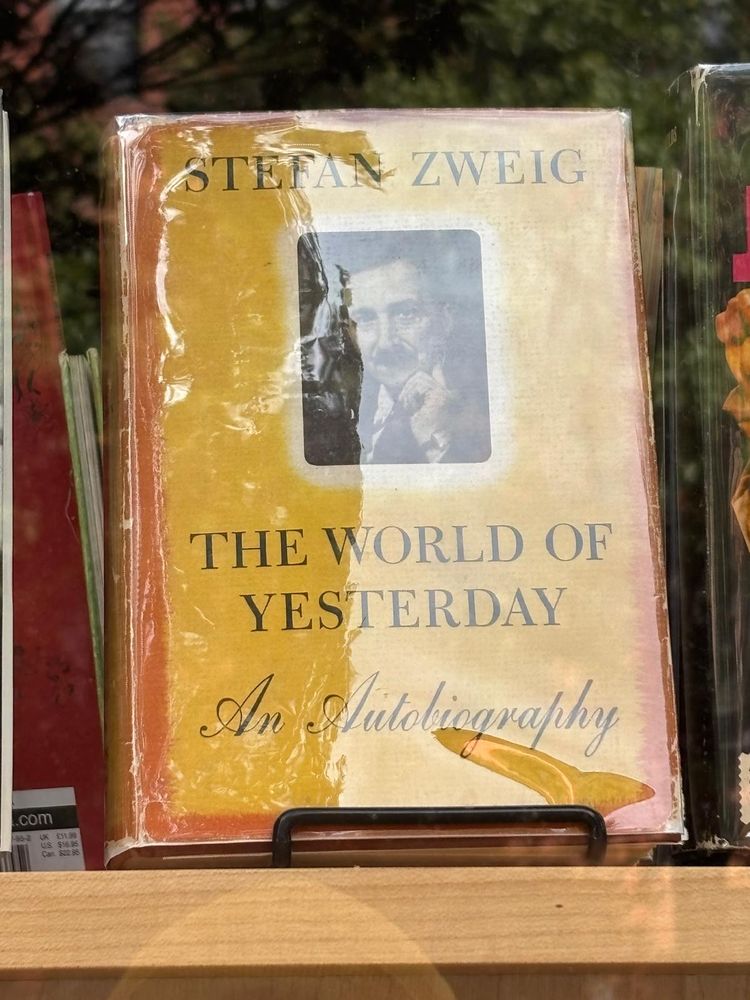
Zweig mailed the manuscript of his memoire and last work, The World of Yesterday, to his publisher the day before he took his own life. In this issue we juxtapose two short excerpts from that book with a first-hand account of the violent apprehension of a Mexican immigrant in Park Slope, Brooklyn. Writing this introduction from within despair instead of from outside it, I was reminded by one of the editors of the words W. E. B. Dubois used in 1903 when describing the feeling he had while looking into (and then through) his new-born child’s eyes staring into the depths of his own: “… clinging with that tiny, dimpled hand—ah, warily!—to a hope not hopeless but unhopeful and seeing with those bright wondering eyes that peer into my soul a land whose freedom is to us a mockery and whose liberty is a lie.”
Member discussion